Nigerian dishes that start with red palm oil
A short list. Everything on it depends on the oil being real.
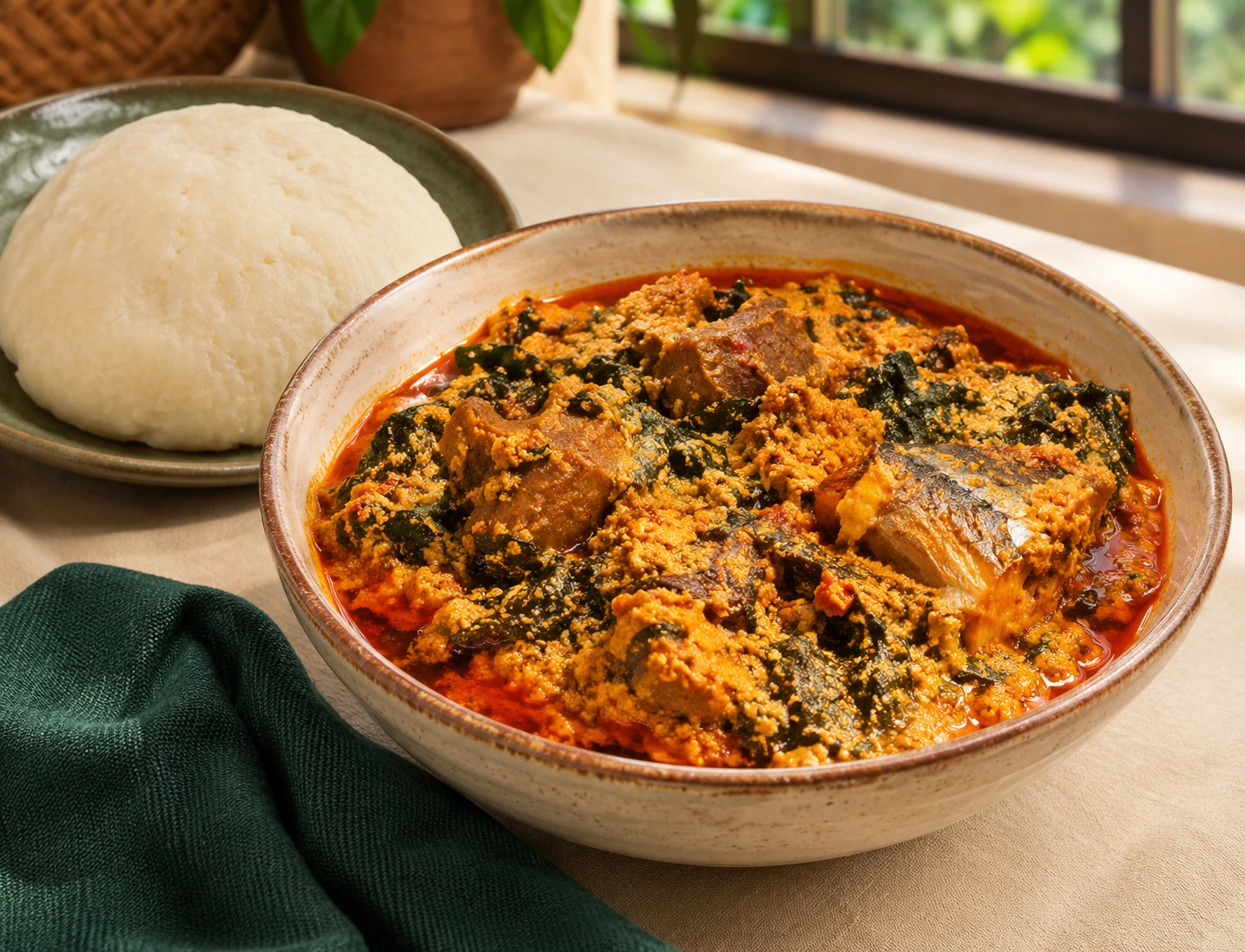
Red palm oil is the first ingredient in a lot of what Nigerian home cooking tastes like. Here are nine dishes where swapping the oil for a cheap substitute shows up straight away in the finished plate.
Soups and stews
Banga soup: the Delta classic. Palm oil is the base and the colour. Without it the soup goes watery.
Ofe nsala-with-palm: the Igbo white pepper soup, but the version that uses a spoon of red palm oil at the end for colour and depth.
Egusi: the ground-melon soup. Covered in detail in a separate article.
Efo riro: the pepper-and-vegetable stew. A spoonful of palm oil at the pepper-frying stage deepens the colour without competing with the greens.
Ogbono: the draw soup. The palm oil carries the ogbono seed paste as it thickens.
Rice dishes
Palm oil rice (concoction rice): no tomato, no stew. Just rice cooked in palm oil with crayfish, dried fish and vegetables. A Delta and Rivers staple.
Jollof: not strictly a palm oil dish, but a spoon of palm oil in the base pepper fry adds colour depth without competing with the tomato.
Bean dishes
Adalu and beans porridge: the palm oil is poured over at the end, which is where most of the flavour of the finished plate lives.
Quick snacks
Boli with palm oil and pepper: roasted plantain dipped in a small bowl of warm palm oil mixed with ground pepper, dry fish and crayfish. Weekend food.
What ties the list together is that the oil is on the plate, not hidden. That is the only reason the quality of it matters this much.
Want to try the oil the article is about?
Dynoil red palm oil, milled in Nigeria. Ten pack sizes, one price list.