Egusi that keeps its colour
The ground-melon soup is only as good as the oil you start it in. A short note on why.
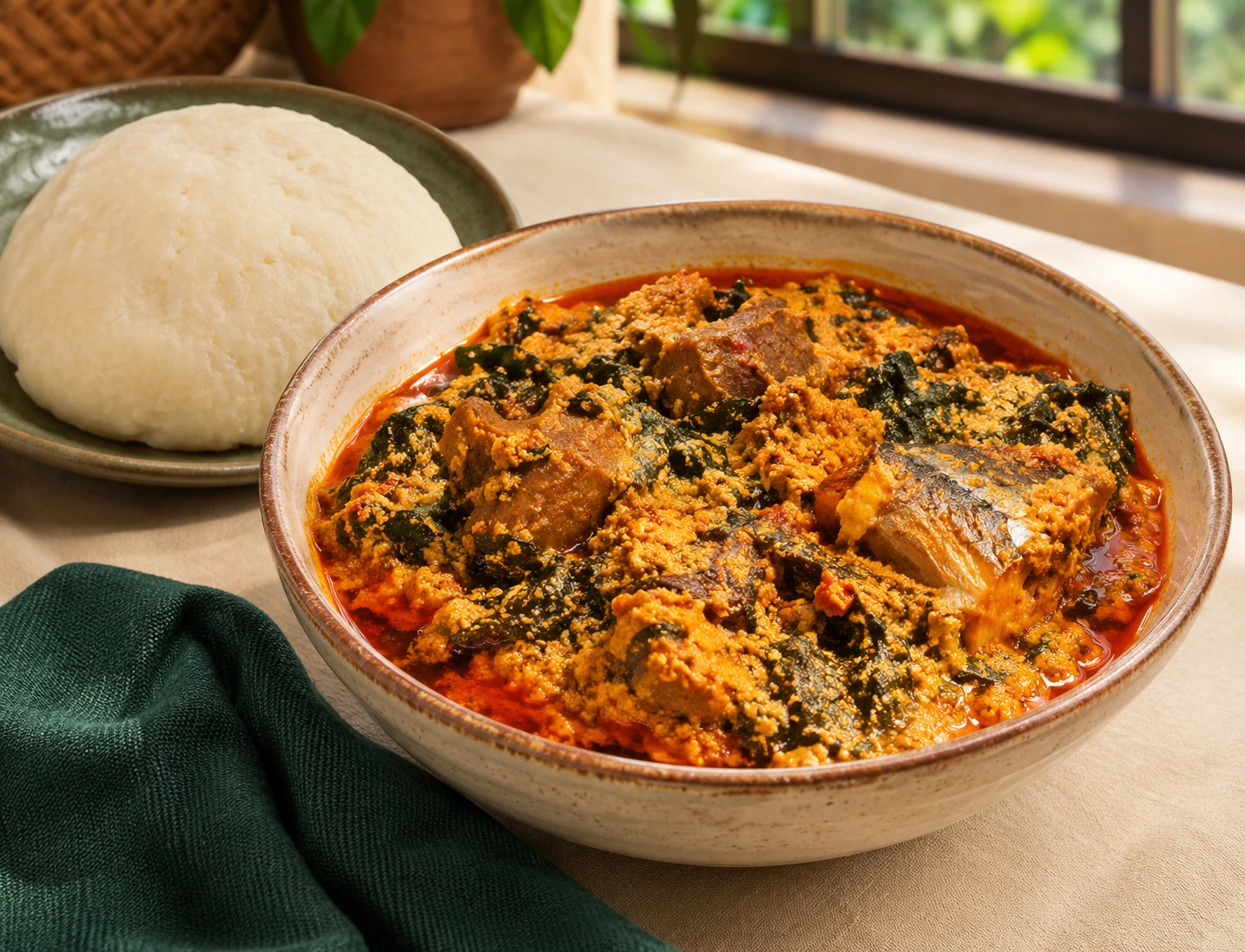
Good egusi finishes a warm orange-red with the melon paste visibly bound into the sauce and the ugwu or spinach still green. Dull brown egusi with watery oil floating on top usually means the oil let the dish down, not the cook.
What good oil does in this dish
Red palm oil fries the ground egusi at the start so it cooks into a thick paste instead of boiling into clumps. The carotene in the oil binds to the fat in the melon seeds, which is what gives the finished soup its depth of colour. Oil that has been stripped or thinned has no colour to give, so the egusi turns pale and the sauce separates.
A quick method (lumpy style)
Blend your scotch bonnet, tatashe and tomato with onion. Mix a cup of ground egusi with cold water to a thick paste. Heat a third of a cup of Dynoil red palm oil on medium, not high. Pour in the pepper blend and fry for five minutes until the oil separates to the top. Drop small spoonfuls of the egusi paste into the oil (this is what gives you the lumps). Let them cook for three minutes without stirring, then stir gently.
Add your meat stock and assorted meat (beef, ponmo, shaki, smoked fish) with locust beans and ground crayfish. Simmer for ten minutes until the egusi lumps firm up and the oil comes to the top. Stir in chopped ugwu or spinach off the heat so it wilts without greying. Season and serve.
Why the oil matters here
Egusi is a short soup. The oil has twenty minutes to give its colour, bind the seeds and carry the spice. Thinned oil has nothing to give in that window. Pressed-and-bottled red palm oil does the whole job on its own.
Serve with pounded yam, eba or fufu.
Want to try the oil the article is about?
Dynoil red palm oil, milled in Nigeria. Ten pack sizes, one price list.