Transporting and reselling red palm oil
A short guide for distributors who want fewer returns and happier shelves.
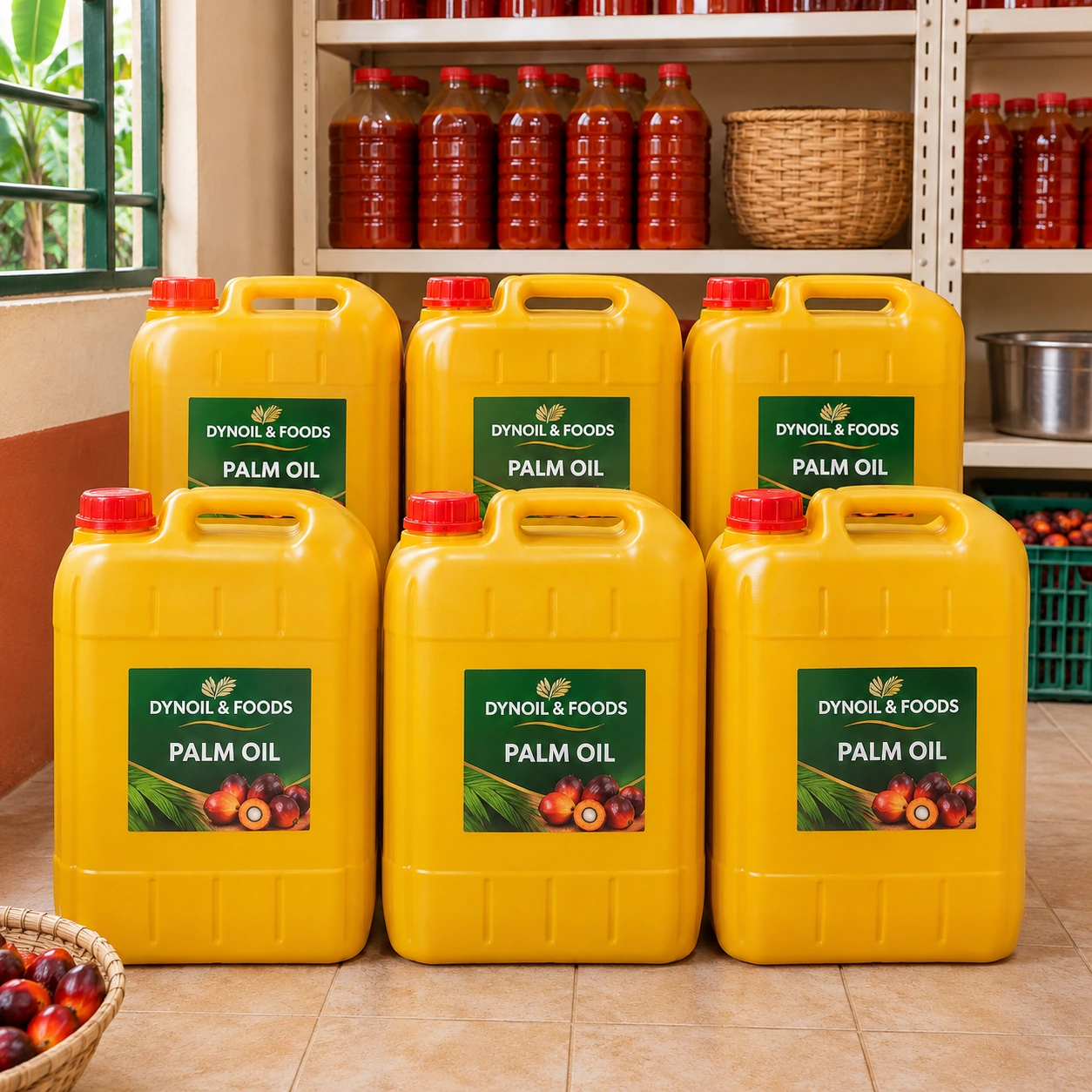
Red palm oil is forgiving in the kitchen and less so in transit. A few habits keep a pallet intact from mill to shelf.
Transport
Keep the cartons upright. Caps are tight but gravity still wins over a long bumpy road. Load them away from direct sun on the back of a truck; a hot cab can push the oil above its stable temperature range for hours and shorten the shelf life.
Storage at the shop
Store cartons in the coolest part of the store, off the floor on a pallet or shelf, away from any wall that gets direct sun. The floor transfers heat and moisture, which is where leaks start.
Rotation
First in, first out. Red palm oil is dated, and a customer who buys a bottle with a short shelf life is a customer who comes back less. Mark each carton with the mill date on arrival and sell the older ones first.
Displaying
Keep the bottles upright on the shelf and group pack sizes together so a buyer can see the price ladder. A single row facing the aisle sells more than a double-stacked wall of bottles at the back.
Returns
Have a short written policy with your supplier for broken seals, cracked bottles or short dates. If the supplier will not agree one, that is useful information about who you are buying from.
Reorder timing
Reorder when the back row runs out, not the front. A week of empty shelf costs more than a day of extra storage.
Dynoil publishes wholesale terms and keeps the same price list for every distributor. Reach us through the enquiry form for a quote on a pallet.
Want to try the oil the article is about?
Dynoil red palm oil, milled in Nigeria. Ten pack sizes, one price list.