Buying red palm oil in bulk: a checklist for shop owners
The six questions to ask any supplier before you take a pallet.
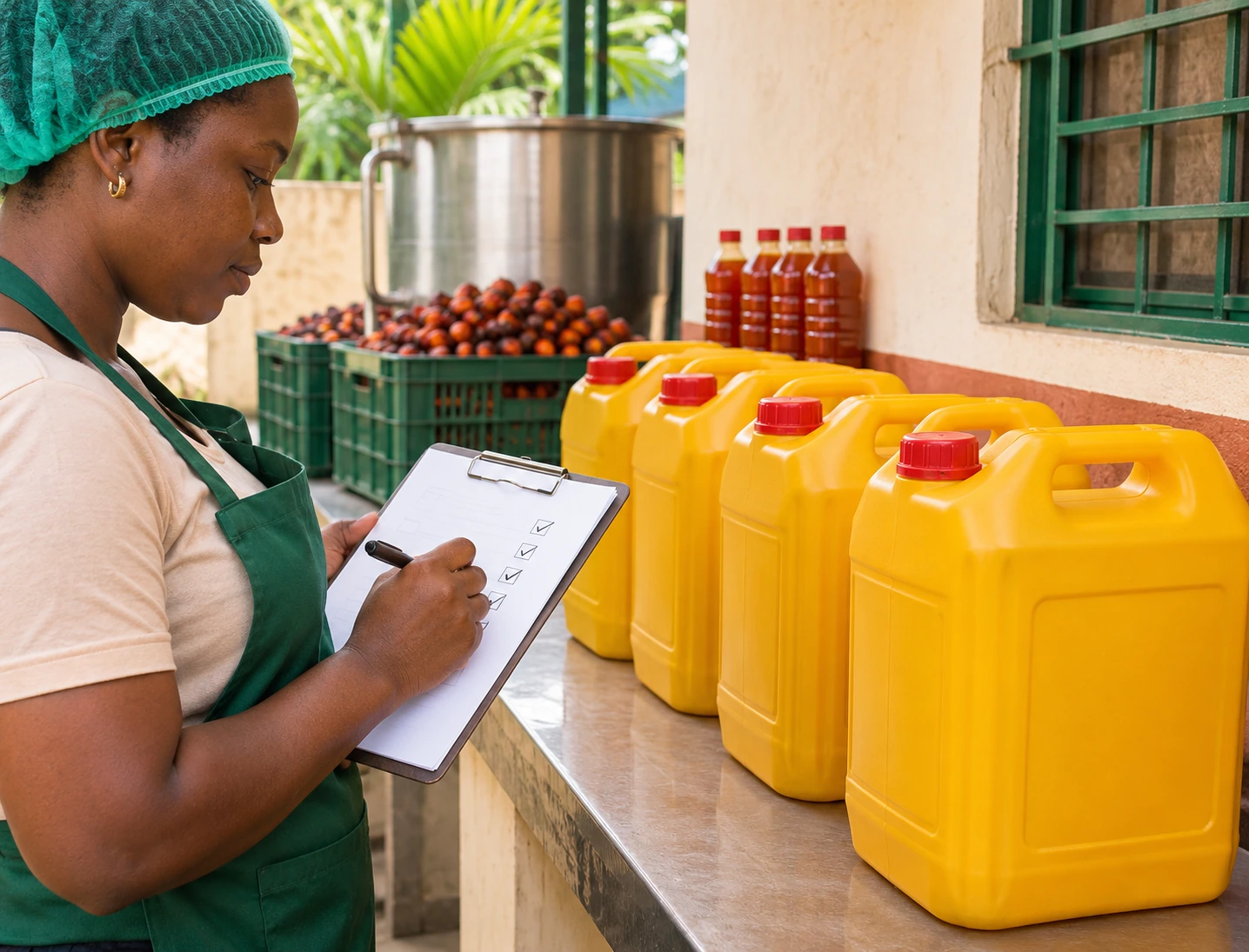
Buying in bulk is where shop owners either make or lose their margin. The price per litre comes down, but so does the chance to check each bottle. Before you commit to a pallet from any supplier, work through this list.
1. What is in it
Ask for a straight answer: single-source red palm oil, or a blend. If the answer is vague, assume blend. Pure oil costs more to produce and the supplier will be happy to say so.
2. Who pressed it
A mill that presses its own oil can name the farms it buys from. A middleman cannot. The name of the mill and its location should be on the bottle label, not just a brand name.
3. Batch and best-before
Every bottle should have a batch number and a date. If the dates on the pallet are already more than three months old, your margin is going to shrink because the oil will sit on the shelf less time.
4. Returns
Ask about the return policy for broken seals, leaking caps or short dates. A real supplier has a clear answer. Someone selling from a car boot does not.
5. Delivery terms
Who pays for transport, and who is liable if the pallet is damaged in transit. Agree it in writing before the first order, even if the writing is a WhatsApp message.
6. Price schedule
A real supplier has a published price list per pack size. If the price changes every time you call, you are buying from a trader, not a producer. Dynoil publishes the same list on this site that goes to wholesale buyers.
Want a wholesale quote? Reach us through the enquiry form or send a WhatsApp.
Want to try the oil the article is about?
Dynoil red palm oil, milled in Nigeria. Ten pack sizes, one price list.